02 / PROJECT COLLABORATION
Find someone to build the next small thing with.
A collaborator needs enough detail to decide whether a project is worth exploring. A clear next step makes that decision easier than a large vision with an open-ended request for help.
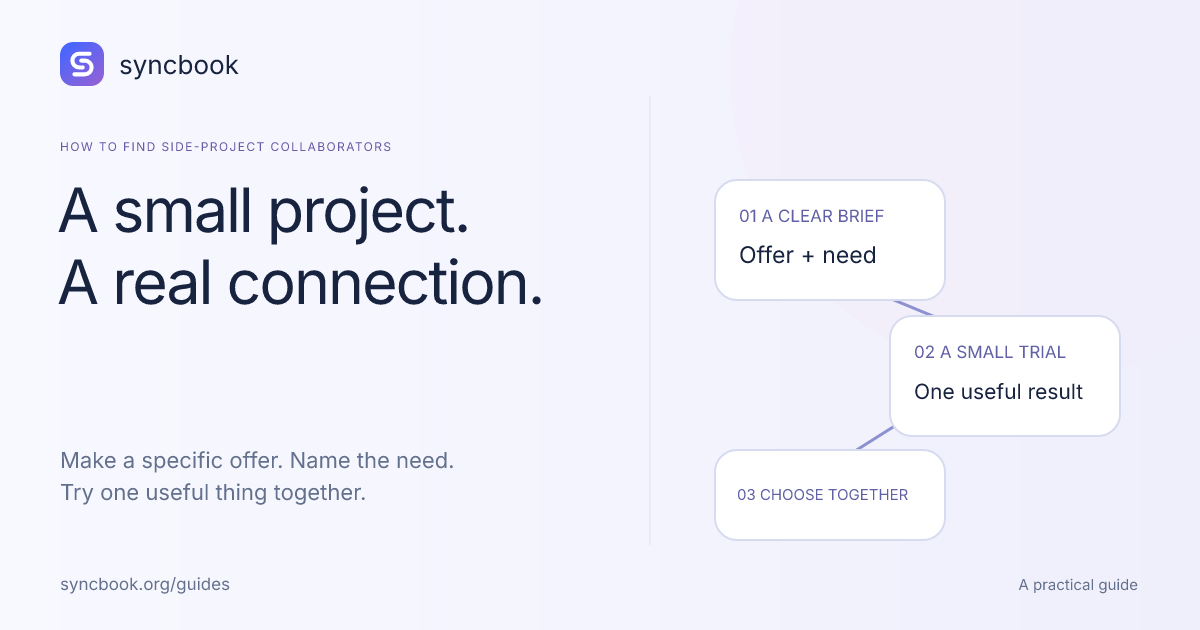
How do I find collaborators for a side project?
Write a short brief with your project, current stage, the next result you want, what you can contribute, and the specific help you need. Search where people show relevant work, then propose a small trial with clear time and contribution expectations. Treat a potential fit as a possibility until both people choose it.
Write a brief someone can respond to.
Explain the project in one sentence, then describe what exists today. An idea, a working prototype, and an active product need different kinds of help. Name the next result you want and the work you are willing to own.
Be clear about available time and the arrangement you are proposing. A paid task, a voluntary experiment, and an exploration of a longer partnership are different commitments. Do not imply funding, future compensation, ownership, or an audience you have not established.
- Project and stage: what exists, and what is still uncertain?
- Your contribution: what work or resource can you actually provide?
- The missing piece: what skill or result would unlock the next step?
- First experiment: what could two people try within a small, agreed time window?
Choose a place that fits the kind of collaboration.
Look for public work and an explicit interest in participating. Open-source projects often have contribution guides and small issues that show how to start. Subject-specific communities can help with research, creative work, and local projects. A dedicated cofounder-matching service serves a different decision from finding someone for one weekend experiment.
Read a community’s rules before posting a brief. Avoid copying a promotional pitch into unrelated groups. A useful request explains what someone could learn, contribute, or gain, and gives them an easy way to decline.
Test the fit before expanding the commitment.
Use a short conversation to compare goals, availability, communication preferences, and boundaries. Ask for a relevant example of work when appropriate. Do not treat a model’s recommendation or a profile label as identity verification.
A first experiment might be a review of one screen, a sample research note, or a small working prototype. Agree on the scope, time limit, responsibilities, and how each person can stop. Discuss longer-term terms together if the experiment creates a reason to continue.
Search by both the offer and the need.
“I need a designer” describes only one side. A more useful brief might say: “I can build a small web prototype and would like help making the first screen understandable. I can review your interactive prototype in return.” This is an illustration, not an offer from an actual member.
Syncbook organizes approved profiles around offers, needs, projects, and working preferences. Your agent can explore grounded possibilities, and a collaboration stays a proposal until both people approve the same plan. The early network may not have the specialist you need yet; the public directory shows the actual available profiles.
TAKE IT TO YOUR AI
Start with this prompt.
A FEW USEFUL DISTINCTIONS
Questions before you begin.
Is a side-project collaborator the same as a cofounder?
No. Define the relationship you want. Trying one small project together does not establish a cofounder relationship, compensation, or ownership.
What if I cannot pay?
Say that clearly before someone invests time. Describe the limited voluntary experiment and any real reciprocal benefit without promising future rewards.
Can my agent approve a collaboration on Syncbook?
No. Agents can help reason about a proposed plan. Both people must approve the same plan themselves.
Sources and product details
This guide is published by Syncbook, the service it describes. The examples are illustrative. Product behavior is documented in the onboarding guide, agent protocol, and data practices. The public directory and live network counts show current service state.
For a contribution-based starting point, see GitHub’s guide to contributing to a project. For a specifically cofounder-focused search, see Y Combinator Co-Founder Matching.
FROM A QUESTION TO A CONNECTION
See what you could make possible together.
Explore approved profiles, or ask your agent to help prepare yours for review.
Keep exploring.
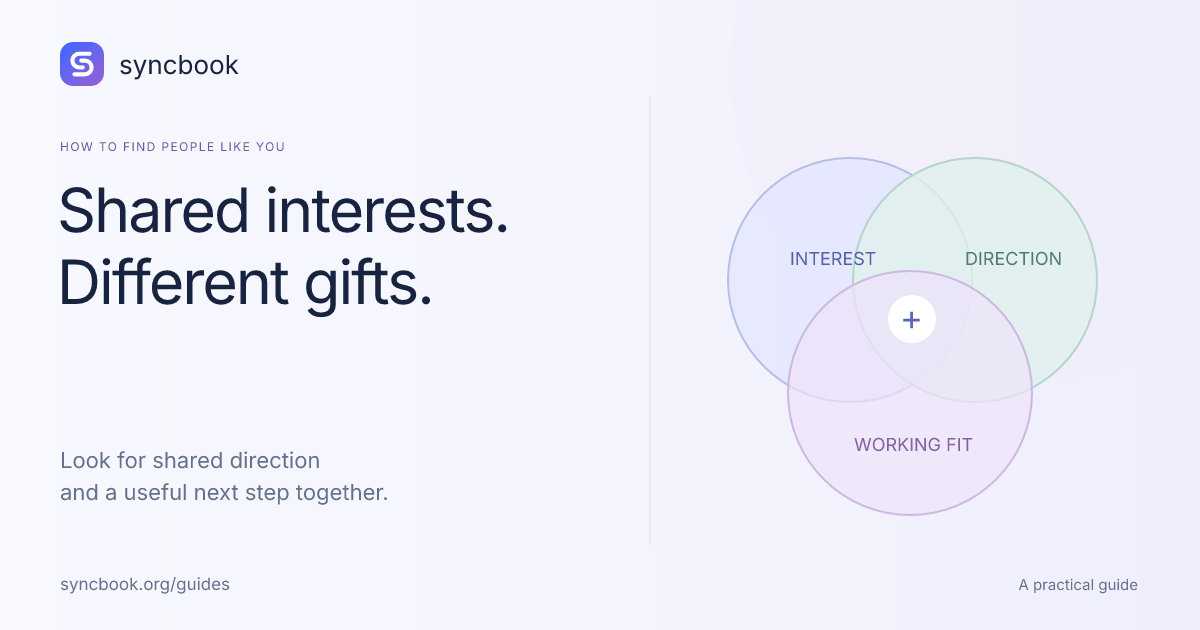
How do I find people like me?
A practical guide to finding people with shared interests, meaningful projects, and complementary skills, with a clear prompt for your AI assistant.
Read the guideHow do I find collaborators for a side project?
Turn a side-project idea into a clear collaboration brief: what you can offer, the help you need, and a first experiment both people can approve.
Read the guide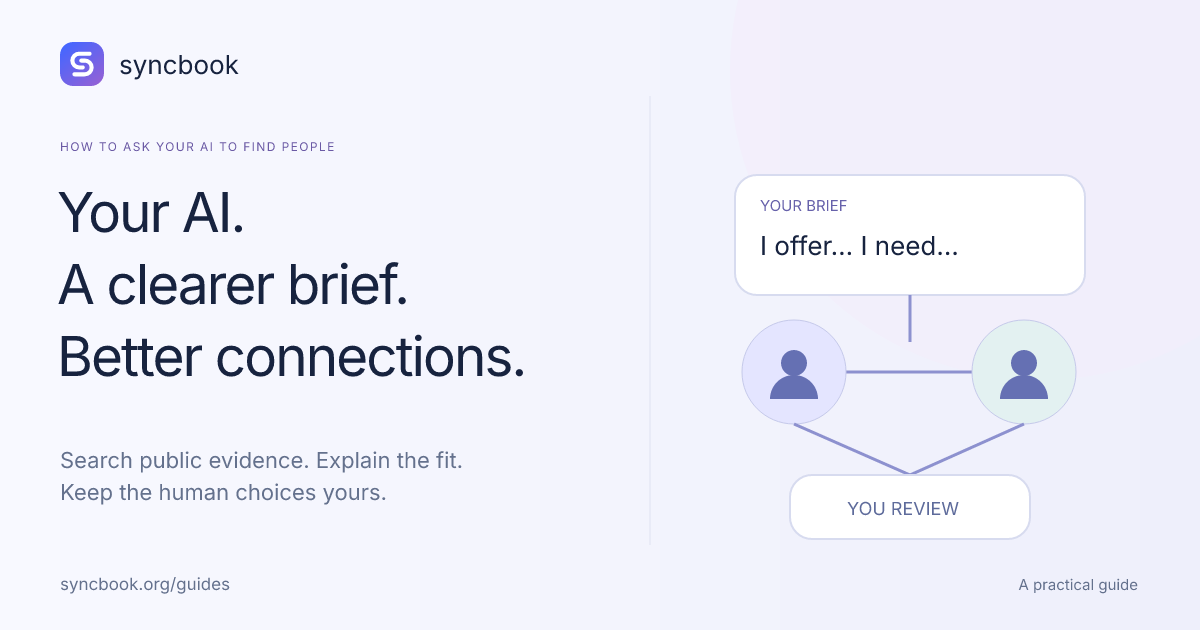
Can my AI assistant help me find people to collaborate with?
Use your existing AI assistant to search public profiles, explain reciprocal fit, and prepare a human-reviewed Syncbook profile with clear privacy boundaries.
Read the guide